


Trong phẫu thuật cấy ghép implant, việc lựa chọn và đặt chính xác trụ vào vị trí cần cấy ghép implant chiếm tỷ trọng lớn trong việc thành công của ca cấy ghép implant. Trong bài viết này, nha khoa Phương Sen sẽ cung cấp đầy đủ thông tin về máng định vị hướng dẫn phẫu thuật.
1. Tổng quan về máng định vị hướng dẫn phẫu thuật
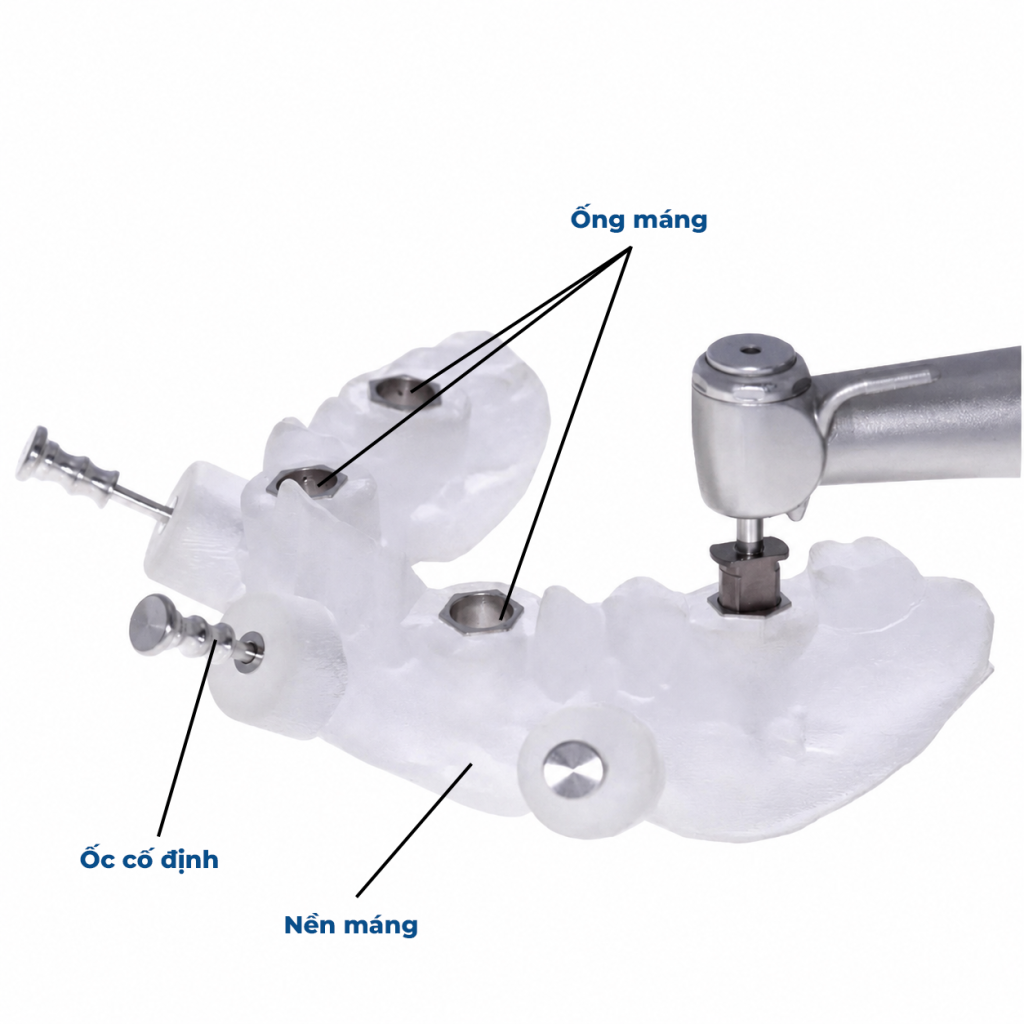
Máng định vị hướng dẫn phẫu thuật là dụng cụ nha khoa hỗ trợ xác định vị trí trong phẫu thuật cấy ghép implant, được in 3D bằng nhựa trong suốt hoặc kim loại, được thiết kế dựa trên mẫu dấu hàm và phim chụp CT ConeBeam của khách hàng. Trong đó, máng định vị hướng dẫn phẫu thuật được thiết kế bao gồm 4 bộ phận chính là nền máng, ống hướng dẫn chính, khớp nối, các thành phần phụ trợ khác, cụ thể:
-
Nền máng: Phần tiếp xúc trực tiếp với nướu hoặc xương hàm, đóng vai trò cố định máng trong suốt quá trình phẫu thuật. Thông thường, nền máng được làm bằng nhựa cứng trong suốt, điều này cho phép việc quan sát xương hàm trong quá trình cấy ghép implant.
-
Ống hướng dẫn: Một trong những bộ phận quan trọng của máng, trong đó ống hướng dẫn được thiết kế để định vị chính xác vị trí và hướng đặt trụ implant. Cụ thể hơn, kích thước của ống hướng dẫn chính được thiết kế tương đương với đường kính của trụ implant, trong đó vị trí, hình dáng và hướng trụ được xác định dựa trên hình ảnh chụp phim CT.
-
Khớp nối: Bộ phận kết nối giữa máng hướng dẫn và dụng cụ phẫu thuật, giúp bác sĩ dễ dàng thao tác, điều chỉnh vị trí và hướng của Implant trong quá trình cấy ghép. Khớp nối được thiết kế chắc chắn, chính xác, đảm bảo độ an toàn cho ca phẫu thuật.
Ngoài ra, máng định vị hướng dẫn phẫu thuật còn được cấu tạo bởi một số bộ phận/chi tiết khác, liên kết mật thiết đến cấu trúc và chức năng hoạt động của máng, điển hình như sau:
-
Vít cố định: Cố định máng vào nướu hoặc xương hàm, đảm bảo máng không bị xê dịch trong quá trình phẫu thuật.
-
Mốc định vị: Hỗ trợ bác sĩ xác định vị trí chính xác của máng trên cung hàm.
-
Lỗ thông khí: Đảm bảo lưu thông khí trong khoang miệng trong suốt quá trình phẫu thuật.
-
Máng hướng dẫn cắt rạch: Hỗ trợ bác sĩ xác định vị trí và đường cắt rạch chính xác.
-
Máng hướng dẫn gắn mão: Xác định rõ vị trí và hướng gắn mão sứ sau khi cấy ghép implant.
2. Công dụng của máng định vị hướng dẫn trong cấy ghép implant
-
Bảo tồn mô xương và mô mềm: Hạn chế xâm lấn, đặc biệt trong kỹ thuật cấy ghép không lật vạt.
-
Giảm nguy cơ biến chứng: Tránh tổn thương xoang hàm, ống thần kinh răng dưới và các cấu trúc giải phẫu quan trọng.
-
Rút ngắn thời gian phẫu thuật: Quy trình được chuẩn hóa, thao tác nhanh gọn.
-
Tăng tỷ lệ tích hợp xương: Hệ thống định vị của máng hướng dẫn xác định chính xác khu vực mật độ xương phù hợp.
-
Nâng cao trải nghiệm bệnh nhân: Máng định vị hướng dẫn tính toán và mô phỏng chi tiết vị trí cấy ghép implant, hạn chế tối đa xâm lấn trên khung hàm, từ đó giảm đau, ít sưng, hồi phục nhanh.

4. Quy trình trồng răng implant ứng dụng máng định vị hướng dẫn
Quy trình trồng răng implant có máng định vị được tính toán, đo lường chuẩn xác theo thuật toán của công nghệ định vị dựa trên kết quả thực tế khung hàm của khách hàng, bao gồm 5 bước:
Bước 1: Thăm khám, chụp phim CT và chẩn đoán tổng quát
Đầu tiên, khách hàng được chụp phim CT để đánh giá mật độ xương, chiều cao và chiều rộng xương hàm, cùng các vấn đề bệnh đề tồn tại ở khung hàm, từ đó hình thành kết quả phán đoán tổng quát.
Bước 2: Lập kế hoạch điều trị kỹ thuật số
Dựa trên kết quả chẩn đoán tổng quát kết hợp với kết quả tính toán và phân tích của phần mềm mô phỏng chuyên dụng, bác sĩ sẽ thiết kế phương án điều trị phù hợp với từng trường hợp cấy ghép implant.
- Dự đoán kết quả phục hình cuối cùng
- Tính toán mức độ chịu lực sinh học của trụ implant
- Điều kiện tương thích, tích hợp của xương thực tế
Bước 3: Thiết kế và sản xuất máng định vị hướng dẫn
Dữ liệu chẩn đoán được chuyển sang hệ thống CAD/CAM hoặc in 3D y sinh để tiến hành chế tác máng định vị cá nhân hóa. Quá trình sản xuất được thực hiện bởi kỹ thuật viên một cách cá nhân hóa, chuẩn xác đến từng micromet.
Bước 4: Tiến hành phẫu thuật trồng răng implant
Sau khi hoàn tất tiệt trùng, máng hướng dẫn phẫu thuật được đặt cố định trong khoang miệng. Tại vị trí cấy ghép implant, bác sĩ sẽ tiến hành khoan và đặt trụ implant theo hướng dẫn mô phỏng được tính toán, thông thường phương pháp này không cần lật vạt.
Bước 5: Đánh giá hậu phẫu và phục hình
Sau 3-6 tháng, trụ tích hợp xương ổn định, bác sĩ sẽ tiến hành gắn khớp nối abutment và mão răng sứ, hoàn tất quá trình trồng răng implant.
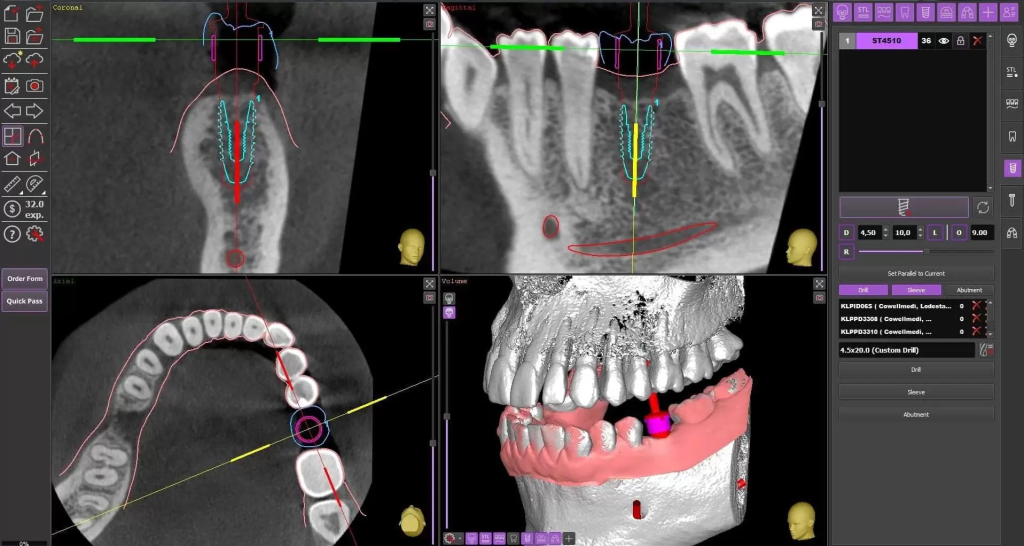
Máng định vị hướng dẫn phẫu thuật là một trong những bước tiến y học khi nâng tỷ lệ an toàn, chính xác trong cấy ghép implant. Cùng với máng định vị phẫu thuật là phần mềm mô phỏng hỗ trợ tính toán và phán đoán vị trí cấy ghép implant phù hợp. Việc ứng dụng công nghệ máng định vị hướng dẫn trong cấy ghép implant phản ánh trình độ chuyên môn của đội ngũ y bác sĩ, đồng thời đảm bảo tính ổn định và thành công lâu dài cho các ca cấy ghép implant, đặc biệt trong bối cảnh yêu cầu về chức năng ăn nhai bền vững và thẩm mỹ cao.